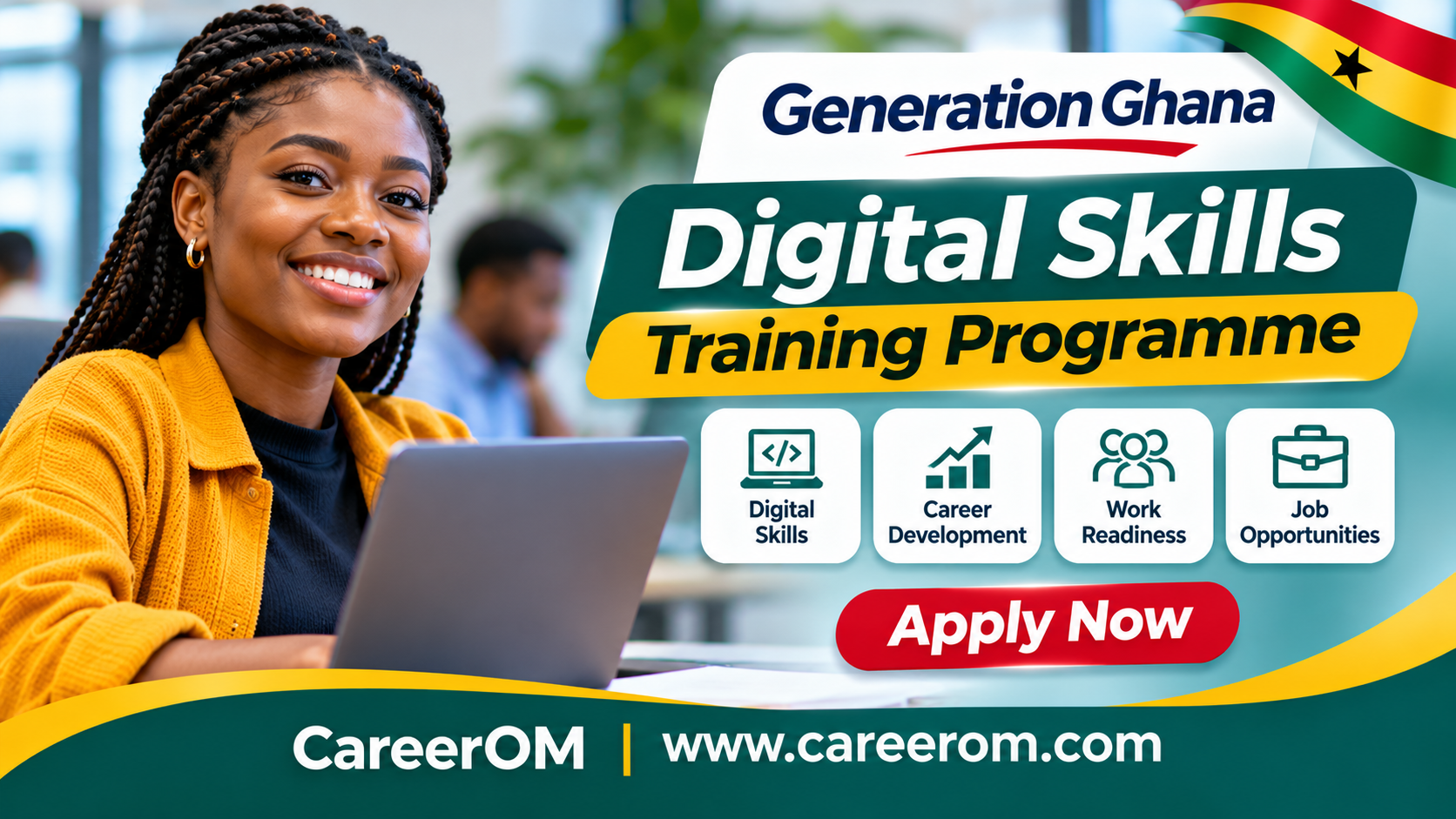
Generation Ghana digital skills training is part of a five-year employment target of 50,000 jobs for young people through skills training and employment support. The initiative, reported on 18 November 2026, places a stronger focus on connecting training with work rather than skills acquisition alone.
Generation Ghana digital skills training: What is the target?
Generation Ghana says its goal is to help 50,000 young people into employment over five years. The programme’s country leadership has highlighted the challenge of graduate unemployment and the need for training that is closely connected to employer demand. This is a long-term target, not a promise of 50,000 immediate vacancies.
How the GROW initiative works
The Ghana Remote Online Work (GROW) initiative, delivered with the Mastercard Foundation, has supported more than 2,500 young people over the past three years, according to the report. Training pathways reported include digital marketing, data analysis, cloud computing, web development and digital customer support.
Courses have been described as intensive programmes lasting roughly eight to 15 weeks. The programme’s reported employment outcome is around 70 per cent placed within 90 days of graduation. That is an outcome reported by the programme—not a guaranteed result for every applicant or future cohort.
Digital skills pathways learners can explore
- Digital marketing: campaign planning, content, analytics and practical marketing projects.
- Data analysis: tools and techniques for collecting, cleaning, analysing and presenting data.
- Cloud computing: foundational cloud knowledge and practical cloud skills.
- Web development: building and maintaining websites and web applications.
- Digital customer service: communication, customer-support processes and digital tools.
Generation Ghana’s current programme pages list free training options, with eligibility and delivery format varying by course. Some current listings indicate age ranges such as 18–35, but candidates should check each programme’s requirements and application status before proceeding.
What applicants should do before applying
- Choose one career pathway: compare the five areas with your interests, strengths and the type of work you want to do.
- Check the current programme: confirm that the course is open, whether it is online or in-person, its location, eligibility and schedule.
- Prepare for assessments: review the application requirements and any screening quizzes or basic skills checks listed by the provider.
- Plan your time: intensive programmes can require regular attendance and project work; confirm the hours before committing.
- Build evidence: complete practical projects, keep a portfolio and learn to explain your work clearly to employers.
- Use official channels: apply through Generation Ghana’s website and avoid paying intermediaries for access to free training.
Does the programme guarantee a job?
No. Training and placement support can improve a learner’s preparation and access to employers, but job outcomes depend on the programme, the individual, employer demand and other factors. The reported 70 per cent placement figure should not be interpreted as a guarantee for a future intake. Learners should also distinguish a course completion certificate from proof of job-ready capability: projects, communication, practical work and interviews remain important.
How to turn training into a job-search plan
Before starting a course, identify the types of jobs you want to pursue and review several current job descriptions. Use those adverts to build a list of the tools, competencies and experience employers ask for. During training, keep a record of assignments and projects. After completing a project, write a short case study explaining the problem, the tools used, your approach and the result. This evidence can make your CV and interviews more specific than a list of certificates alone.
Where to find current programmes
Visit Generation Ghana’s official programme directory to see current courses and application details. The organisation’s official website also provides information for learners and employers.
For other opportunities, explore CareerOM career guides and career and employment updates.