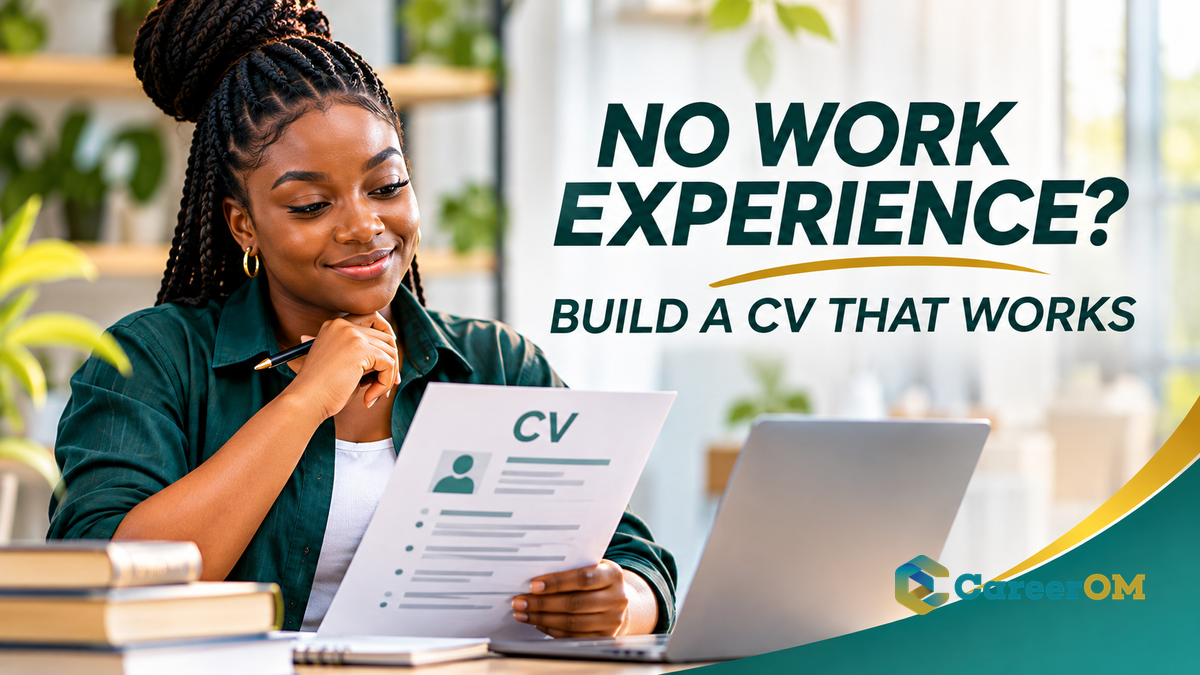
Not having formal work experience does not mean you have nothing to put on your CV. If you’re applying for internships, graduate programmes or entry-level jobs, a CV with no work experience can still show recruiters your potential through projects, coursework, volunteering, leadership, skills and practical learning.
Start with a clear, simple structure
Use a clean layout with consistent headings and readable fonts. For many entry-level applications, one page is a useful target if you can present your relevant information clearly without squeezing the text. Use a longer document only when the role or your experience justifies it.
Organise your CV into sections such as:
- Contact details and professional profile
- Education
- Relevant skills
- Projects or practical experience
- Internships, volunteering or leadership
- Certifications or relevant training
Write a short profile that says more than “hardworking”
Use two or three sentences to identify your field, strongest relevant skills and the kind of contribution you can make. Avoid generic claims that could describe anyone. Mention a project, tool, area of study or practical strength that connects to the role. The profile should be specific and honest, not a list of buzzwords.
Turn coursework and projects into evidence
Projects can demonstrate initiative and applied skills even when they were completed as part of your studies. Describe the objective, what you personally did, the tools or methods you used and the result.
Instead of writing “Participated in a group project,” try a specific description such as “Analysed survey responses in Excel, summarised three recurring customer themes and presented recommendations to a five-person project team.” Use truthful details and measurable results where you have them.
Include volunteering, campus roles and extracurricular activities
Student association roles, volunteering, event coordination, peer tutoring, sports leadership and community activities can demonstrate teamwork, organisation, communication, responsibility and problem-solving. Include them when they are relevant, and describe your contribution rather than just listing a title.
Match your skills to the job description
Review the requirements of each vacancy and identify skills you can genuinely demonstrate. Include relevant technical skills, software, language ability and transferable skills—but avoid keyword stuffing or claiming proficiency you cannot support in an interview. If a job asks for Excel, for example, describe the spreadsheet work you have actually done rather than simply adding “Excel” to a skills list.
Keep formatting ATS-friendly
For online applications, use conventional section headings, text-based content and a straightforward layout. Avoid placing essential information inside images, complex tables or decorative text boxes. Follow the employer’s file-format instructions and check that your CV remains readable when converted to PDF. A simple, well-organised document is easier for both screening software and people to read.
Proofread and tailor before submitting
Check spelling, dates, contact details, consistency and the file name. Tailor the profile and the order of relevant skills or experiences to each role. Never invent employment, qualifications, projects or results. Make sure the email address you use is professional and that your phone number is correct.
Entry-level CV checklist
- My contact details are correct and professional.
- The CV clearly identifies the role or field I am targeting.
- Education, projects and relevant experience are easy to find.
- Bullet points describe my contribution and evidence, not just duties.
- Skills listed are relevant and defensible.
- The layout is readable and suitable for online applications.
- I checked the CV for errors and tailored it to this vacancy.
Once your CV is ready, use a consistent job-search routine. Our guide to a weekly graduate job search routine can help you organise applications, deadlines and follow-ups.
Find entry-level roles, internships and graduate opportunities through CareerOM.